
Our newest AI Quest: Mapping the human brain
Overview
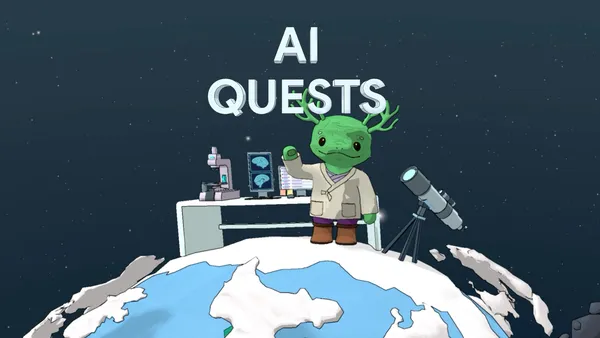
Google has recently launched an expansion of its AI Quests initiative, introducing a new lesson titled “Polar Peaks” that delves into the intricate field of neuroscience. Moving beyond foundational AI concepts, this module specifically focuses on how artificial intelligence can be leveraged to understand and map the complexities of the human brain. This initiative signifies Google’s strategic intent to not only democratize AI literacy but also to position AI as a critical tool for advanced scientific inquiry, bridging the gap between computational power and biological understanding.
Industry Impact
This move by Google carries substantial weight within the AI landscape. Firstly, it elevates the discourse around AI literacy, shifting it from mere technical proficiency to a deeper appreciation of AI’s interdisciplinary potential and ethical implications, especially in sensitive domains like neuroscience. For existing and emerging AI education platforms, Google’s foray into specialized, domain-specific learning paths sets a new benchmark, potentially influencing curriculum development across the industry. It also subtly reinforces Google’s own AI frameworks and research capabilities as integral to cutting-edge scientific exploration, thereby encouraging their adoption within academic and research communities. The intersection of AI and neuroscience is a rapidly expanding frontier, and Google’s active participation through educational initiatives can significantly accelerate innovation, fostering a new generation of AI specialists equipped with strong biological or cognitive science backgrounds.
Why It Matters
For AI builders and founders, Google’s “Polar Peaks” initiative underscores several critical, forward-looking trends. The future of AI innovation is increasingly found at the confluence of disparate disciplines. Pure technical expertise, while foundational, is becoming insufficient; a profound understanding of specific application domains, such as biology, medicine, or materials science, will be paramount. This reality presents immense opportunities for creating specialized AI tools, platforms, and services that effectively bridge these disciplinary divides. Founders should identify unmet needs at these intersections, focusing on AI solutions that are not just technically robust but also deeply embedded in domain-specific workflows and challenges. Furthermore, applying AI to understanding complex, highly sensitive systems like the human brain magnifies the importance of interpretability, ethics, and robust validation. Startups prioritizing explainable AI, responsible AI development, and transparent methodologies will gain a significant competitive edge.
Key Takeaways
- Google is expanding AI literacy efforts into complex scientific domains with its “Polar Peaks” neuroscience lesson.
- The initiative highlights AI’s increasingly vital role in advancing understanding of the human brain.
- It signals a growing demand for interdisciplinary AI expertise, fusing technical skills with domain-specific knowledge.
- AI education is evolving to emphasize real-world, application-driven learning beyond basic coding.
- New market opportunities are emerging for AI solutions focused on scientific discovery and ethical implementation.