
Google Search gets a major upgrade with Gemini 4 Hydrogen
Overview
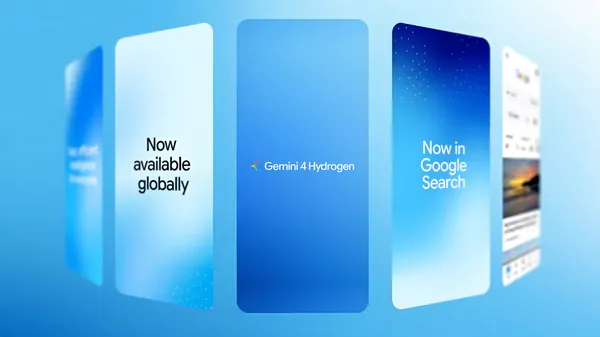
Google's strategic integration of Gemini 4 Hydrogen into its flagship Search product marks a pivotal moment, transcending typical incremental updates. This move signifies a fundamental re-imagining of information retrieval, shifting from keyword-centric matching to a deeply embedded multimodal AI experience. Gemini 4 Hydrogen promises more helpful, visual, and intuitive responses, indicating Google's intent to leverage its cutting-edge large multimodal model (LMM) research to interpret complex, natural language queries and generate rich, contextual results directly within the search interface. It positions Google to redefine the user's interaction paradigm, moving towards a generative, conversational model of search.
Industry Impact
The rollout of Gemini 4 Hydrogen globally instantly ratchets up the competitive pressure in the nascent but rapidly escalating AI search arena. Google is decisively reasserting its formidable AI capabilities and market dominance against challengers like Microsoft's Copilot and Bing Chat. This integration will likely accelerate the pace of multimodal AI adoption across the entire tech ecosystem, prompting competitors and smaller players to innovate faster in generative interfaces and advanced semantic understanding.
For users, expectations are about to be profoundly reshaped. Search will evolve from merely a gateway to links into a dynamic, interactive dialogue, where answers are not just presented but often synthesized and visualized directly. This could have significant implications for traditional content publishers and websites, as the need to click through to external sources for basic information diminishes. Furthermore, it validates the immense R&D investment in LMMs, showcasing their practical utility and scalability in a product used by billions, setting a new benchmark for AI productization.
From a monetization standpoint, this presents both opportunities and challenges. Google will need to carefully integrate advertising into a generative environment, ensuring sponsored content is clearly differentiated while maintaining a seamless user experience. New ad formats and placement strategies may emerge as the search experience becomes more fluid and dynamic.
Why It Matters
For builders and founders, this development underscores an undeniable truth: AI is no longer an optional add-on but a foundational layer for compelling digital experiences. The era of simply "bolting on a chatbot" is giving way to deeply integrated, multimodal AI interfaces that are central to product functionality and user interaction. Any digital product or service that relies on information retrieval, content generation, or user interaction must now consider how it can leverage or compete with this new benchmark in AI-powered search.
Content creators, particularly, face a renewed imperative to produce highly differentiated, authoritative, and unique content that provides value beyond what a generative AI can easily synthesize. Discoverability strategies must evolve beyond traditional SEO to consider how content can be surfaced, referenced, and valued within a generative answer paradigm. This also opens avenues for developers to build innovative applications that anticipate and complement these advanced AI capabilities, focusing on niche domains or highly specialized interactive experiences that go beyond general search.
Key Takeaways
- Google Search is undergoing a foundational, multimodal AI transformation with Gemini 4 Hydrogen.
- This integration significantly intensifies the competitive landscape in AI-powered search.
- User expectations for search experiences will shift towards more conversational, visual, and intuitive interactions.
- Content creators and digital businesses must adapt their strategies for discoverability and value delivery.
- The move validates and accelerates the widespread adoption and productization of large multimodal models.
Related reading
Democrats launch Nvidia investigation, write scathing letter on Huang’s ‘scheme’ with Trump
TechCrunch AIMuse can now place calls to U.S. businesses — if you pay
TechCrunch AINebius tests the neocloud playbook with $40 billion in planned spending
OpenAI NewsHow Amplitude ships product improvements in 1–2 days with OpenAI