
What is Artificial General Intelligence (AGI)?
What is Artificial General Intelligence (AGI)?
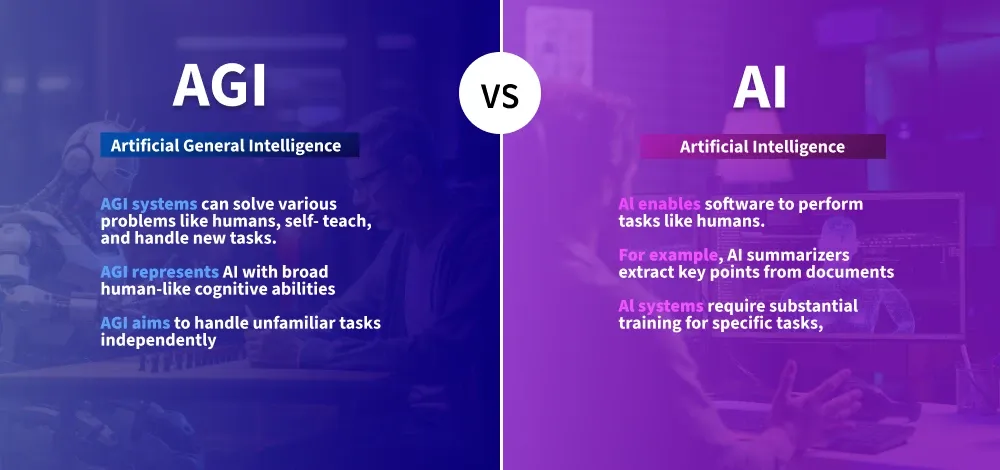
Imagine a world where a single software system can write a screenplay, diagnose a complex medical condition, and pilot a spacecraft—all without being specifically programmed for each individual task. This is the promise of Artificial General Intelligence (AGI). Unlike the specialized tools we use today, AGI is the theoretical point where a machine possesses the ability to understand, learn, and apply knowledge across an exhaustive range of tasks, effectively matching or exceeding human intelligence.
AGI vs. Narrow AI
To understand AGI, we first need to look at what we currently have: Artificial Narrow Intelligence (ANI). Most of the cutting-edge tools in our directory, such as ClipHub.ai for video processing or Synthesia for AI-driven video content, are narrow. They are world-class at their specific functions but cannot spontaneously decide to solve a math problem or learn a new language without human intervention.
The Quest for the Holy Grail
The journey toward AGI is being led by titans of innovation. Research organizations like Google DeepMind and OpenAI are explicitly focused on developing systems that can generalize. We are already seeing early glimpses of this capability in large language models like Claude, which demonstrate a surprising level of reasoning and creative problem-solving across different disciplines.
Autonomous Agents: A Stepping Stone
One of the most exciting developments toward AGI is the rise of autonomous agents. Frameworks like AgentGPT allow AI to set its own goals and execute multi-step plans to achieve them. This shift from 'responding' to 'acting' is a critical component of general intelligence. Powering this massive computational requirement is the high-performance hardware provided by NVIDIA AI, which serves as the backbone for training these increasingly complex models.
Why AGI Matters
AGI would signify a paradigm shift in human history. It wouldn't just be another tool; it would be a partner in solving humanity's greatest challenges. As we move closer to this futuristic reality, keeping track of the building blocks—the specialized tools and research platforms—is essential for anyone looking to stay ahead in the tech landscape.