
The Evolution of AI Systems - From Reactive Chatbots to Autonomous Agents
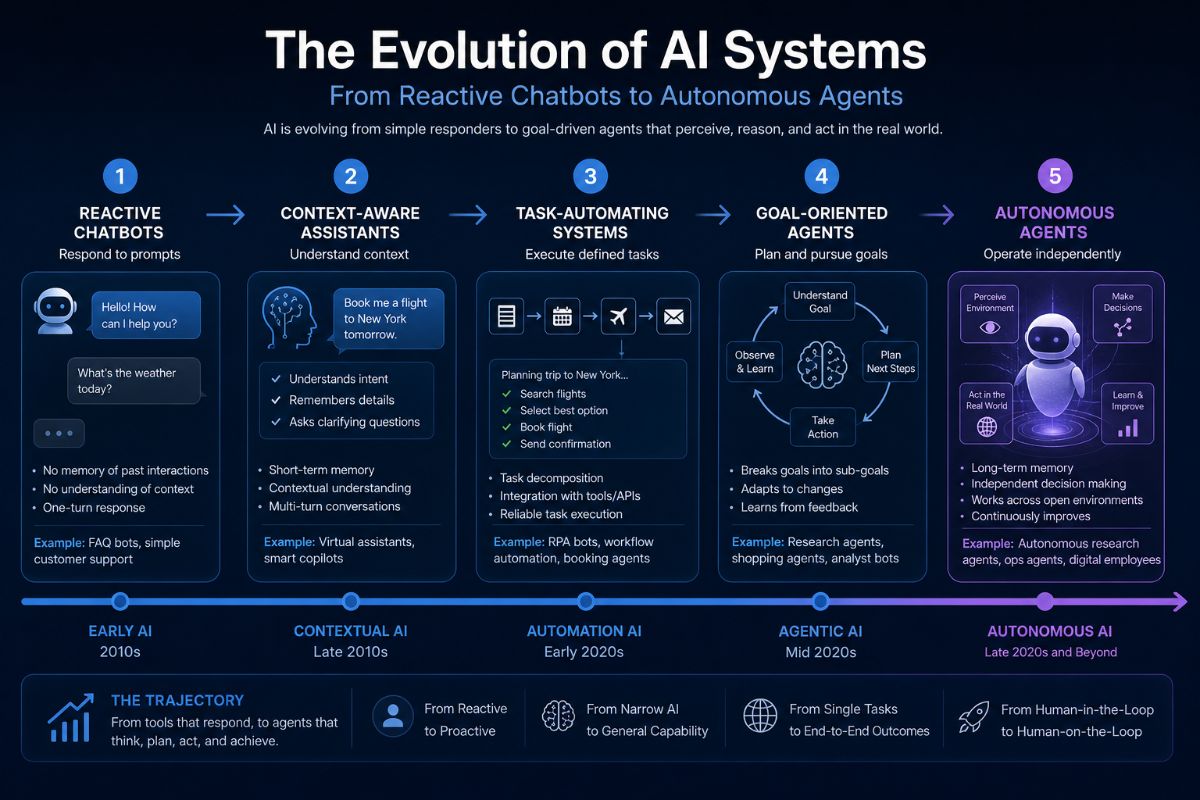
The Evolution of AI Systems - From Reactive Chatbots to Autonomous Agents
The landscape of Artificial Intelligence has undergone a profound transformation, evolving from simple, rule-based systems to complex, adaptive autonomous agents. This journey represents not just technological advancement, but a fundamental shift in how AI interacts with and impacts our world. At AI Tool Hub, we've witnessed this evolution firsthand, observing a progression that continues to accelerate.
The Dawn of Reactive AI: Chatbots and Rule-Based Systems
In its earlier stages, AI was largely characterized by reactive systems. These were programs designed to respond to specific inputs based on predefined rules. Think of the early chatbots that could answer basic FAQs or perform simple tasks. While groundbreaking at the time, their capabilities were limited to their programming, lacking true understanding or foresight. Tools like ChatGPT, Google Gemini, and Claude represent the pinnacle of this reactive, conversational AI, offering sophisticated language understanding and generation capabilities that have revolutionized communication and information access.
The Rise of Cognitive AI: Learning and Reasoning
The next significant leap brought forth cognitive AI, systems capable of learning from data, reasoning, and adapting their behavior over time. These AI models moved beyond simple reactions, starting to interpret context, identify patterns, and even make predictions. This era saw the emergence of AI assistants and specialized tools that could process complex information, summarize content, and automate intricate workflows. Examples include Otter.ai for intelligent meeting transcriptions and Notion AI, which integrates AI directly into productivity workflows to assist with writing, summarizing, and organizing. Furthermore, tools like Grammarly showcase advanced cognitive abilities in language correction and style improvement.
The Advent of Autonomous Agents: Planning and Independent Action
The frontier of AI is now dominated by the concept of autonomous agents. As highlighted by IBM Research, AI agents are systems that can perceive their environment, make decisions, and take actions to achieve specific goals, often without constant human intervention. They possess an internal state, memory, and the ability to plan multi-step tasks. This represents a monumental shift, enabling AI to not just respond or learn, but to proactively pursue objectives.
- Self-Correction and Goal Pursuit: Autonomous agents can break down complex goals into sub-tasks, execute them, and even self-correct if they encounter obstacles. Tools like AutoGPT and AgentGPT are pioneering this space, demonstrating the potential for AI to manage projects from conception to completion.
- Specialized Agentic Systems: Beyond general-purpose agents, we see specialized AI agents emerging in various domains. For instance, Devin by Cognition showcases an AI software engineer capable of writing, debugging, and deploying code. In the recruitment sector, tools like AIApply leverage agentic principles to automate significant portions of the job application process, from resume tailoring to cover letter generation.
- Orchestration and Collaboration: The future of autonomous agents also involves their ability to collaborate and orchestrate other AI models or tools. Frameworks like Microsoft AutoGen and CAMEL-AI are paving the way for teams of AI agents to work together on complex problems.
The Impact and Future of AI Autonomy
The transition to autonomous agents holds immense promise across industries. In software development, agents could accelerate innovation. In business operations, they could optimize processes, as seen with tools like Qatalog by ClickUp, which streamlines workplace knowledge and tasks. The implications for productivity, problem-solving, and discovery are staggering.
However, this evolution also brings new challenges, particularly around ethics, safety, and control. Ensuring that autonomous agents operate within defined parameters and align with human values is paramount. As AI continues its rapid ascent, tools from the AI Tool Hub Matchmaker will become even more crucial in navigating this complex and exciting technological frontier, helping users find the right AI solutions for their evolving needs.
Conclusion
From reactive chatbots that provided immediate answers to autonomous agents that can plan and execute intricate strategies, AI has come a long way. This journey reflects a continuous quest for more intelligent, capable, and independent systems. The evolution is far from over, and as AI agents become more sophisticated, they will undoubtedly reshape our understanding of what machines can achieve, ushering in an era of unprecedented automation and innovation.