Career Paths in Artificial Intelligence
Career Paths in Artificial Intelligence
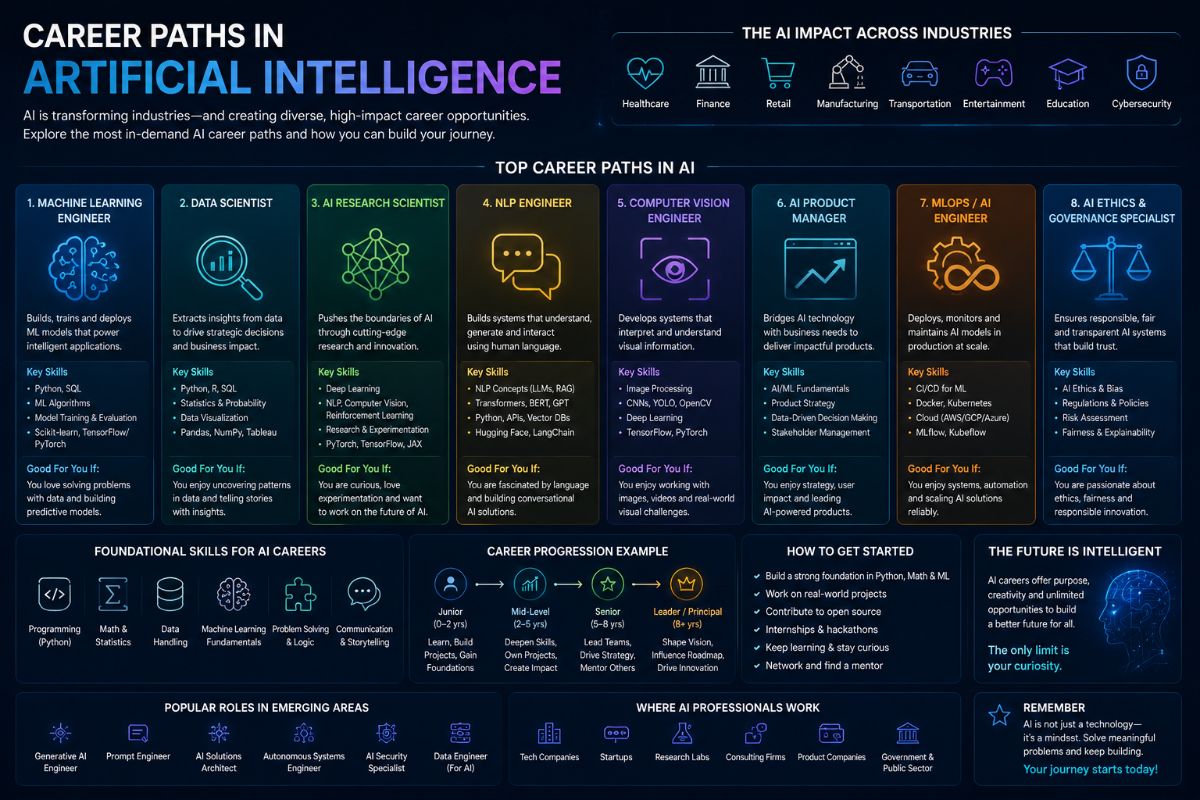
The landscape of artificial intelligence is expanding at an unprecedented rate, creating a myriad of exciting and high-demand career opportunities. As AI continues to integrate into every facet of our lives, from automating routine tasks to powering complex decision-making systems, the need for skilled professionals in this field is skyrocketing. This blog post will explore some of the most prominent career paths in AI, the skills required, and how you can navigate your journey into this transformative industry.
The Exploding Demand for AI Talent
The demand for AI talent is robust and continues to grow. Companies worldwide are actively seeking individuals who can develop, implement, and manage AI solutions. Tools like Workforce Wave are emerging to help organizations better manage their evolving workforce needs in this tech-driven era.
Key Career Paths in AI
- Machine Learning Engineer: These professionals are at the heart of AI development, designing, building, and maintaining machine learning systems. They work with algorithms, data models, and programming languages to create intelligent applications. Tools such as Kling 3.0 and Kling 3.0 AI Video Generator exemplify the kind of innovative applications ML engineers help bring to life, from advanced AI video generation to core AI functionalities.
- Data Scientist: Data scientists are crucial for extracting insights from vast datasets, which often form the basis for AI models. They analyze complex information to identify trends, build predictive models, and guide strategic decisions. Understanding data is paramount, and platforms like Databricks offer powerful environments for data science work. For deeper analysis and understanding of complex information, tools like ChatDOC and PDF.ai can be invaluable assets.
- AI Researcher: AI researchers push the boundaries of what's possible with artificial intelligence. They explore new algorithms, develop novel AI theories, and conduct experiments to advance the field. Their work often leads to breakthroughs that fuel future AI applications. Resources like Scholarcy can assist in quickly summarizing and understanding research papers, aiding in the research process.
- AI Ethics Specialist: As AI systems become more powerful, ethical considerations are paramount. AI ethics specialists focus on ensuring AI development is fair, transparent, and accountable, mitigating biases and addressing societal impacts. This role requires a blend of technical understanding and strong ethical reasoning.
- Robotics Engineer: This path involves designing, building, and programming robots that can perform tasks autonomously or semi-autonomously. AI plays a critical role in giving robots the intelligence to perceive their environment, make decisions, and interact with the physical world. While not directly linked, the visual processing aspects might leverage similar principles seen in tools like Replaci Vision, albeit on a much grander scale for physical robots.
- Prompt Engineer: A newer, but rapidly growing field, prompt engineers specialize in crafting effective prompts for large language models and generative AI tools to achieve desired outputs. Their expertise is vital in maximizing the potential of conversational AI and content generation. Tools like ChatPromptGenius help streamline this creative and technical process.
Essential Skills for an AI Career
Regardless of the specific path, certain core skills are universally valuable:
- Strong Mathematical Foundation: Linear algebra, calculus, and statistics are fundamental.
- Programming Proficiency: Python is dominant, with R, Java, and C++ also important.
- Data Management Skills: Understanding databases, data cleaning, and data manipulation.
- Problem-Solving and Critical Thinking: AI is about solving complex problems.
- Domain Knowledge: Applying AI to specific industries requires relevant expertise.
- Communication: Explaining complex AI concepts to non-technical stakeholders is crucial. Tools like MyReport AI can assist in generating clear, concise reports.
Getting Started in AI
For aspiring AI professionals, several avenues can lead to a successful career:
- Education: Degrees in Computer Science, Data Science, or related fields provide a strong foundation. Online courses and certifications from platforms like Google Cloud Skills Boost are also excellent resources.
- Practical Experience: Building personal projects, participating in hackathons, and contributing to open-source AI initiatives are invaluable. Platforms like Kaggle offer datasets and competitions to hone skills.
- Networking: Connecting with professionals in the AI community can open doors to mentorship and job opportunities.
- Stay Updated: The AI field evolves rapidly. Continuously learning new technologies and techniques is vital. Resources like StudyX and PrepGo can help in structured learning and preparation.
- Leverage AI Tools: Familiarize yourself with cutting-edge AI tools to boost productivity and learn practical applications. From educational assistants like TeachQuill and EaseMate AI to tools for automating tasks like Grok Automation, understanding their capabilities is a significant advantage. Even career-focused tools like BeamJobs and Jobright can help you navigate the job market more effectively.
The Future is AI-Driven
The AI industry offers a future rich with innovation and impact. Whether you're passionate about developing intelligent systems, extracting insights from data, or ensuring ethical AI deployment, there's a place for you. By acquiring the right skills and continuously adapting, you can secure a rewarding and impactful career in the world of artificial intelligence.